Japan Immigration Fees Jump to ¥75,000 From Oct 1
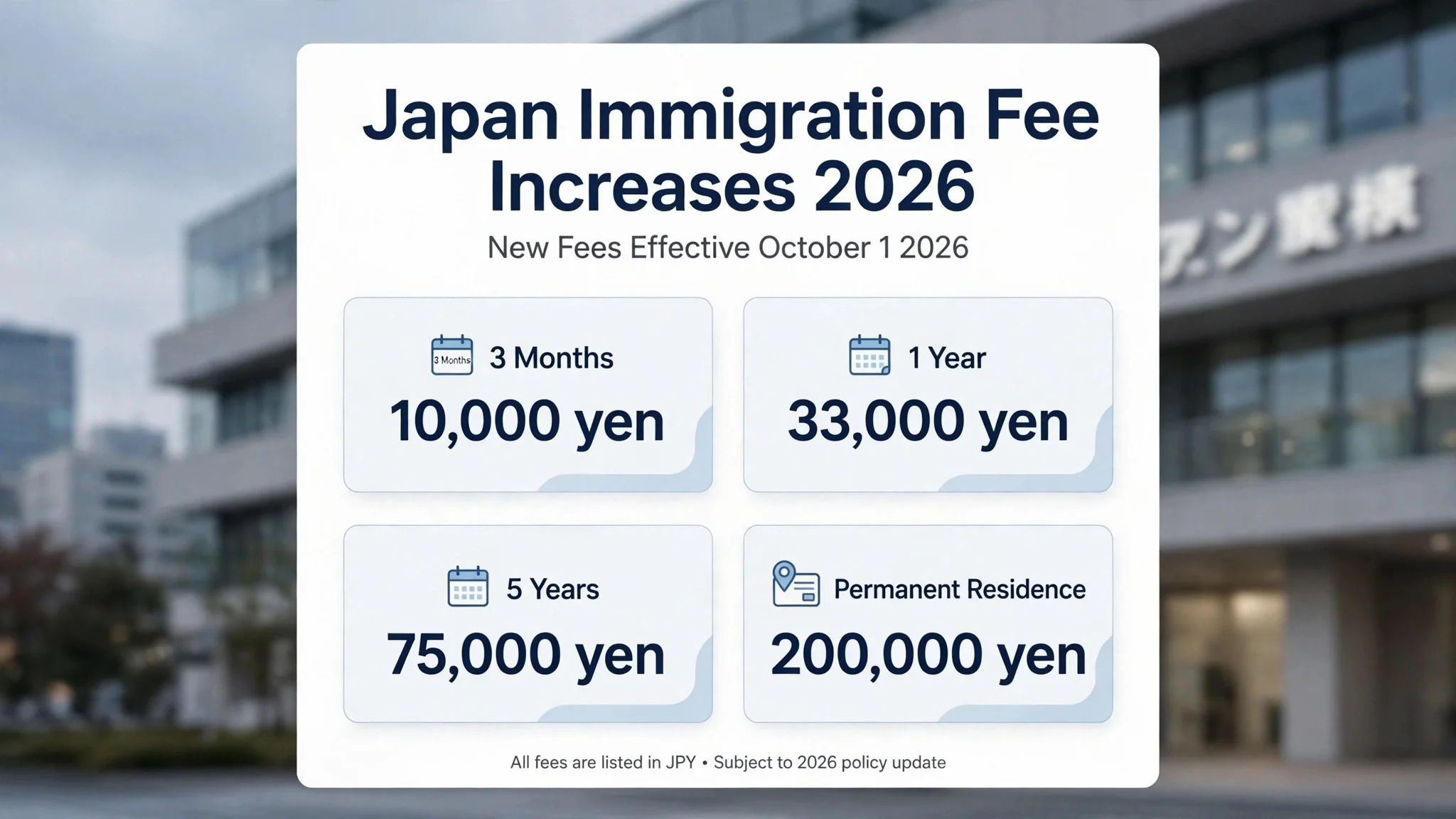
Navigating residence procedures in Japan requires updating your administrative planning to align with major legal revisions. Following statutory amendments to the Immigration Control Act Enforcement Order, Japan's Immigration Services Agency (ISA) implemented a restructured immigration fee schedule for applications submitted on or after October 1, 2026.
We verified the regulatory changes in this report directly against official publications from the Immigration Services Agency of Japan, regional immigration bureau advisories, and ministry enforcement orders.
The updated framework replaces the historic flat-rate fee system for status extensions and changes of residence status with a tiered structure based on the duration of stay granted. It also significantly increases the cost of acquiring Permanent Residence. Understanding these operational tiers helps foreign students, corporate workers, long-term residents, and sponsoring employers budget effectively.
1. Duration-Based Fee Tiers for Extensions and Status Changes
Prior to October 2026, foreign nationals applying to extend their period of stay or change their residence status paid a flat fee of 6,000 yen at immigration counters (or 5,500 yen via the official online portal), regardless of whether they received a 1-year or a 5-year permit.
Under the current system, the fee is directly linked to the actual period of stay granted by the reviewing officer, rather than the period requested on the application form.
For applications processed at physical immigration counters, the fee tiers are:
1. 3 months or less: 10,000 yen
2. Over 3 months up to 6 months: 18,000 yen
3. Over 6 months to less than 1 year: 25,000 yen
4. 1 year: 33,000 yen
5. Over 1 year to less than 3 years: 48,000 yen
6. 3 years to less than 5 years: 64,000 yen
7. 5 years: 75,000 yen
Digital Discount Incentives: To encourage adoption of the online application system, ISA offers lower fee tiers for electronic filings submitted through the official residence portal. For instance, a 1-year extension costs 27,000 yen online versus 33,000 yen at the counter, while a 5-year extension costs 56,000 yen online compared to 75,000 yen at the counter.
2. Permanent Residency Permission Fee Revision
The most substantial adjustment occurs in the issuance fee for Permanent Residence (Eikyū Shokuyū).
Under the revised schedule:
1. New Standard Permission Fee: The administrative fee payable upon receiving permanent residency approval has increased from 10,000 yen to 200,000 yen.
2. Payment Condition: This fee is collected only upon successful grant of permanent resident status. Unsuccessful applications incur no processing fee.
3. Restricted Reductions: Reduced fees (20,000 yen) for permanent residence are strictly limited to specific categories, such as spouses and children of Japanese nationals or permanent residents demonstrating recognized economic hardship. Low income alone does not guarantee a fee reduction.
3. Payment Methods and Key Compliance Protocols
To maintain smooth administrative processing when renewing or changing status in Japan, keep these practical points in mind:
1. Online Payment Rules: When applying through the digital portal, traditional revenue stamps (shūnyū inshi) are no longer accepted for fee payment. Applicants must pay using designated electronic methods including convenience store terminals or online bank transfers following email notification from the immigration office. A separate minor transaction fee applies to digital payments.
2. Counter Payment Rules: Applications submitted in person at regional immigration bureaus continue to utilize physical revenue stamps purchased on site, attached to the fee payment slip upon approval notification.
3. Application Date Rule: Fees are determined by the date your application was formally logged at the immigration bureau. Files lodged on or before September 30, 2026, retain the previous 6,000 yen baseline even if final permission was issued after October 1, 2026.
4. Corporate Sponsorship Planning: Employers sponsoring foreign talent on 1-year renewable cycles must account for the higher cumulative administrative costs, especially for mid-career hires or technical intern transfers under specified skilled worker tracks.
SOURCES
Immigration Services Agency of Japan Residence Fee Revisions
Ministry of Justice Japan Amended Immigration Control Regulations
Regional Immigration Bureau Foreign Resident Information portal
Last checked: 3rd November 2026
Get new stories in your inbox
Stories, guides and updates from BenJournal. We send a link to confirm first, and you can unsubscribe at any time.
By subscribing you agree to our Privacy Policy.







No comments yet. Be the first to join the conversation.