EU Migration Assessment Names Countries Under Pressure: What It Means
The European Commission has published its 2026 migration assessment, identifying countries under migration pressure and others at risk. Here's what the findings mean for people planning to study, work or relocate to Europe.
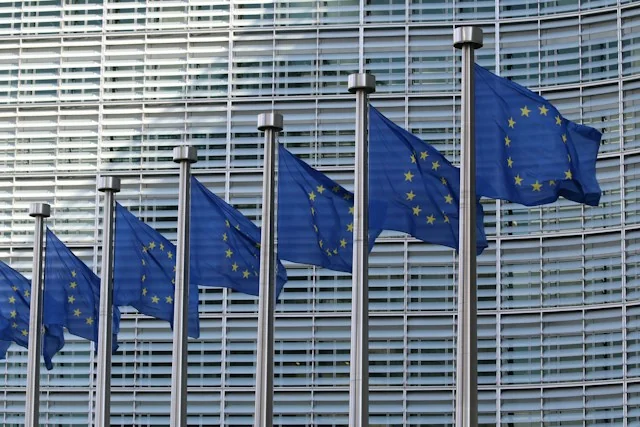
Cover photo: Image by Guillaume Périgois on Unsplash
People planning to move to Europe often focus on individual country visa requirements, but changes at the European Union level can also affect the wider immigration environment.
On 5 November 2026, the European Commission published its second Annual Migration Management Cycle. The announcement provides a picture of migration trends across the EU and identifies countries facing pressure on their migration systems.
The Commission also launched the cycle on 6 November, according to the announcement.
I went through the official publication because there is an important distinction here: this is a migration management assessment, not a new visa restriction for everyone planning to move to Europe.
What exactly has the European Commission announced?
The Commission reviewed migration developments across EU member states and identified three different groups:
- Countries considered to be under migratory pressure.
- Countries considered to be at risk of migratory pressure.
- Countries facing significant cumulative migration pressure over several years.
The findings will help determine how the EU distributes support and responsibilities among member states.
Which European countries are under migratory pressure?
The Commission identified four countries in this category:
- Greece
- Spain
- Cyprus
- Italy
According to the Commission, these countries experienced disproportionate arrivals over the previous year.
They will be eligible to access the EU's proposed Solidarity Pool, subject to the relevant responsibility rules.
Which countries are considered at risk?
The second group includes:
- Belgium
- Czechia
- Germany
- Estonia
- Ireland
- France
- Croatia
- Latvia
- Lithuania
- Luxembourg
- Netherlands
- Poland
- Romania
- Slovenia
- Finland
These countries will receive priority access to the Permanent EU Migration Support Toolbox.
The Commission says the risks can involve irregular arrivals, secondary movements, asylum applications and temporary protection beneficiaries.
This does not mean that these countries have stopped accepting foreign students, workers or ordinary visitors.
What about the countries facing significant cumulative pressure?
The Commission also identified:
- Bulgaria
- Czechia
- Estonia
- Croatia
- Austria
- Poland
These countries have experienced significant cumulative migration pressures over the previous five years.
They may request a full or partial deduction from their contributions to the proposed Solidarity Pool.
Some countries appear in more than one category because the assessments measure different types and periods of pressure.
What is the EU Solidarity Pool?
The Solidarity Pool is a mechanism intended to help EU member states that face disproportionate migration pressure.
The Commission has proposed a second Solidarity Pool for 2027.
Countries will be able to contribute through different arrangements, including:
- Relocating asylum applicants.
- Financial support.
- Responsibility offsets.
- Other agreed support measures.
However, the Council still has to decide the size of the pool and how individual countries will contribute.
The proposal is not yet a final allocation of obligations.
Does this mean getting a European visa will become harder?
Not automatically.
This is probably the most important point for people planning to move abroad.
The Commission's assessment concerns migration management, particularly asylum, irregular arrivals and the distribution of responsibilities between EU countries.
It does not announce a blanket suspension of student visas, work permits or ordinary visitor visas.
Individual countries continue to make decisions on their national immigration routes within the applicable European rules.
For example, someone applying for a German work visa must still meet Germany's relevant requirements. A person applying to study in France must meet the French student visa requirements.
The report should not be interpreted as a new refusal policy for all foreign applicants.
What should people planning to move to Europe do?
If Europe is your destination, I would pay attention to the country you actually intend to move to rather than making decisions based on the EU-wide headline alone.
- For students: Check the university admission and student residence requirements of your destination country.
- For workers: Check the national work permit requirements and whether your occupation qualifies.
- For visitors: Confirm the current visa and entry requirements for your passport.
- For families: Check the relevant family reunification rules.
- For asylum seekers: Use official protection information and qualified legal assistance rather than relying on social media summaries.
What happens next?
The next important step is for the Council to agree on the proposed 2027 Solidarity Pool.
Once the decision is adopted, the member states' contributions will become public and legally binding.
Until then, the Commission's assessment should be understood as an official evaluation and proposal, not a new set of visa rules.
Official Sources & References
- European Commission: Commission launches second Annual Migration Management Cycle.
- European Union: Immigration to the EU, rights and rules.
https://european-union.europa.eu/live-work-study/immigration-eu_en
Publication date: 5 November 2026.
Launch date stated in the announcement: 6 November 2026.
Last verified: 6 November 2026.
Get new stories in your inbox
Stories, guides and updates from BenJournal. We send a link to confirm first, and you can unsubscribe at any time.
By subscribing you agree to our Privacy Policy.







No comments yet. Be the first to join the conversation.