Eastern Latvia Tourism Recovery: What 2026 Figures Reveal About Border
Tourism in Latvia’s eastern border region faced cancellations and uncertainty in 2026, but official figures point to a partial summer recovery. Here is what changed, what remains challenging and what visitors should know before planning a trip to Latgale.
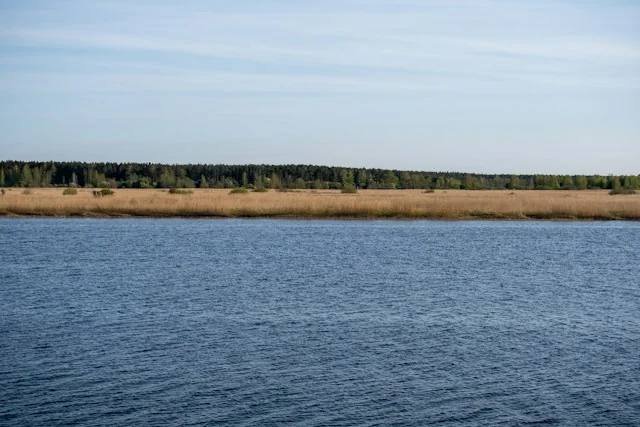
Cover photo: Image by Nikola Tasic on Unsplash
Eastern Latvia’s Tourism Recovery: What the 2026 Figures Reveal About Visiting the Border Region
Latvia’s eastern border region experienced a difficult start to 2026. Security concerns and incidents involving air threats and drone activity in May affected travellers’ confidence, leading to cancellations at accommodation providers and tourist attractions.
However, the region’s tourism figures improved during the summer. The Latvian Investment and Development Agency (LIAA) reported that tourism activity had begun to recover by August, although the situation was not yet fully back to its previous level.
For travellers considering a visit to eastern Latvia, the figures offer a useful picture of a region rebuilding its tourism activity while continuing to manage uncertainty.
What happened to tourism in eastern Latvia?
According to information compiled by the Latgale Tourism Association, at least 5,907 reservations at accommodation facilities and tourist attractions were cancelled during the first half of 2026.
The impact was particularly visible in the second half of May, when businesses reported a 40–60% decline in new reservations. More than 80% of surveyed businesses expected negative trends at that point.
The effect extended beyond bookings. The LIAA reported that 58.5% of tourism businesses in the eastern border region had begun deliberately leaving their location out of marketing materials because they were concerned that travellers might associate the area with security risks.
These figures show how quickly confidence can affect tourism businesses, even when the region continues to have attractions and services available to visitors.
Did tourism recover during the summer?
There were signs of improvement, particularly in August.
The LIAA reported that visitor numbers in June and July remained below the corresponding months of 2025. The declines were 6.34% in June and 5.65% in July.
By August, however, the region recorded a 10.22% increase compared with August 2025. The agency attributed much of this improvement to domestic tourism, with domestic demand rising by 12.3%.
The recovery was also reflected in business activity. Compared with July 2025, the value of transactions recorded in the region’s food service sector increased by 12.2% in July 2026. Accommodation-sector transactions rose by 8.5%, while the travel agencies and tour operators segment recorded a 30.3% increase.
These are encouraging signs, but they should not be interpreted as proof that every tourism business has returned to normal.
What support did the region receive?
The Latvian authorities and tourism organisations introduced measures intended to rebuild confidence and attract visitors.
Among the reported initiatives were:
- Increased support for Home Café Days, with 568 home cafés participating across Latvia and 84,041 visitors recorded.
- More funding for digital tourism campaigns promoting nature, food and cultural experiences.
- Promotional work involving content creators from Lithuania and Estonia.
- Visits by tourism professionals and media representatives from selected foreign markets.
- Guaranteed opportunities for eastern Latvian tourism businesses to participate in major international tourism trade fairs in 2027.
The programme also encouraged public institutions to organise events in the eastern region. The LIAA reported that 233 public-sector events had been identified and organised, attracting 93,800 participants.
These initiatives are important because tourism recovery depends on more than advertising. Events, local businesses, accommodation providers, restaurants and visitor attractions all contribute to a region’s ability to welcome travellers.
What does this mean for visitors?
Eastern Latvia is not simply a region defined by its border location. It includes rural landscapes, lakes, local food, cultural traditions and small communities that form part of the country's wider tourism offering.
The recovery figures may encourage travellers interested in exploring destinations outside Riga and the more familiar routes. They also demonstrate why checking current travel information is important when visiting areas affected by changing security conditions.
Before travelling, visitors should:
- Check current official travel advice and security information.
- Confirm accommodation and attraction opening arrangements directly with providers.
- Check transport connections and local travel conditions.
- Review cancellation terms before paying for accommodation or organised activities.
- Avoid assuming that a regional tourism recovery figure means every locality has the same visitor conditions.
A rise in visitor numbers is not a substitute for checking the situation in the particular town or district a traveller intends to visit.
Is eastern Latvia’s tourism sector fully recovered?
Not yet, according to the figures published by the LIAA.
The agency reported that the total number of guests accommodated in Latvian tourist accommodation during the first eight months of 2026 was still 0.3% below the corresponding period in 2019.
The difference between domestic and international demand was also notable. Domestic guest numbers were 30.8% higher than in the corresponding period of 2019, while foreign guest numbers remained 14.7% lower.
This suggests that domestic travel has played an important role in supporting the sector, while attracting international visitors remains a longer-term task.
Why the story matters beyond Latvia
The experience of eastern Latvia illustrates a challenge faced by tourism destinations in regions affected by geopolitical uncertainty.
A destination can have established attractions, accommodation and hospitality businesses but still experience a sudden decline in demand when travellers become concerned about safety.
The measures taken in Latvia show how public promotion, local events, cooperation with tourism businesses and international marketing can contribute to recovery. The results also underline that confidence takes time to rebuild.
For visitors, the practical lesson is to look beyond broad descriptions of a region. Check the latest local information, understand the location of the places you intend to visit and make travel decisions using current official advice.
Official Sources & References
1. Investment and Development Agency of Latvia (LIAA), Ministry of Economics — “EM support is yielding initial results for the sustainability of the region's tourism sector; additional solutions are being explored”, published 6 November 2026.
https://www.liaa.gov.lv/en/article/em-support-yielding-initial-results-sustainability-regions-tourism-sector-additional-solutions-are-being-explored
2. LIAA — Official agency information and tourism-related updates.
https://www.liaa.gov.lv/en/
Last verified: 21 November 2026.
Editorial note: The visitor and business figures in this article are those reported by the Latvian authorities and tourism organisations. They describe specific periods and should not be treated as a guarantee of current conditions at an individual destination. Travellers should check official advice before departure.
Get new stories in your inbox
Stories, guides and updates from BenJournal. We send a link to confirm first, and you can unsubscribe at any time.
By subscribing you agree to our Privacy Policy.


No comments yet. Be the first to join the conversation.